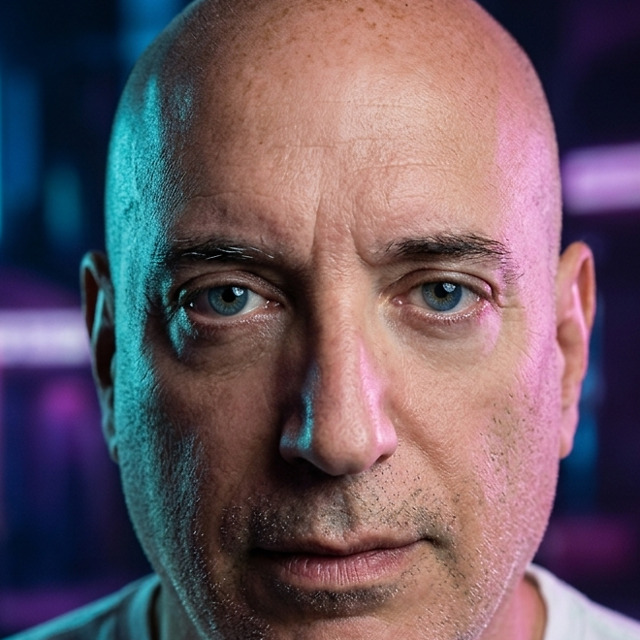
Jack Widman PhD
Mathematician. Software engineer. Co-founder at Sheaf and co-founder at ChocolateLabs.
Research Fellow, Ben-Gurion University of the Negev.
Mathematics
I came to mathematics late. My first degree was in Latin and Ancient Greek, at the City University of New York. After it I taught myself mathematics, took a couple of classes, and then went on to doctoral study. I received my PhD in mathematics from Wesleyan University in 1998, in topology. My thesis was Groups and Algebras: Convergence and Order.
My advisor was Wistar Comfort. He was one of the finest people I have ever known. He was kind and thoughtful, a brilliant mathematician, and very down to earth. He had an attention to detail that reminds me of Steve Jobs, and none of the harshness Jobs was known for. He was a leading figure in set-theoretic topology and in the theory of topological groups, and the Comfort-Ross characterization of pseudocompact groups is one of the standard results of the field.
My thesis is in that area. It proves several theorems about the existence of non-trivial convergent sequences in certain pseudocompact groups. The question is interesting because every infinite compact group has a non-trivial convergent sequence. Pseudocompactness is the natural weaker form of compactness, and it is the point at which that guarantee comes into doubt.
Software
I then spent about twenty-five years as a software engineer, first in startups, then in banking, then in media. I always wanted to build my own software and start a company. That finally happened with Sheaf.
The thread running through those years was the languages. I began in Java and moved to Scala, then to functional Scala, then to Scala written as purely functionally as the work allowed, then to Haskell, and then to Agda and other dependently typed languages. At some point the languages stopped being tools and became the thing I studied. That study led to my current research position at Ben-Gurion University of the Negev, where I work on topology applied to dependent type theory and homotopy type theory. In spring 2025 I was Visiting Professor of Computer Science at Wesleyan University, where I taught How to Design a Program.
Sheaf
Sheaf is where the two halves meet. It checks whether a group of AI agents reasoned from one consistent picture of the facts, stops the actions that rest on contradictions until a person releases them, and records evidence for the ones that go ahead. The check uses sheaf cohomology, the same mathematics for joining partial views into a whole that I studied as a topologist, made to run in a live product. I design, build, deploy, and run it end to end.
Publications and patents
- J. Widman. Sheaf-Theoretic Consistency Measures for Multi-Agent AI. Zenodo, 2026. doi:10.5281/zenodo.20945474.
- J. Widman. Learning Functional Programming: Managing Code Complexity by Thinking Functionally. O’Reilly Media, 2022.
- J. Widman. Topological groups in which every dense subgroup has a convergent sequence.
- J. Widman. Groups and Algebras: Convergence and Order. PhD thesis, Wesleyan University, 1998.
- US provisional patent application on measuring and localizing the consistency of multi-agent AI outputs using sheaf-cohomological invariants, filed June 2026. Patent pending.
- Co-inventor on an earlier issued US patent in search technology.
Contact
jack@sheaf.one
jack@chocolatelabs.me
jack.widman@gmail.com
LinkedIn